Set an achievable finish for the seating area
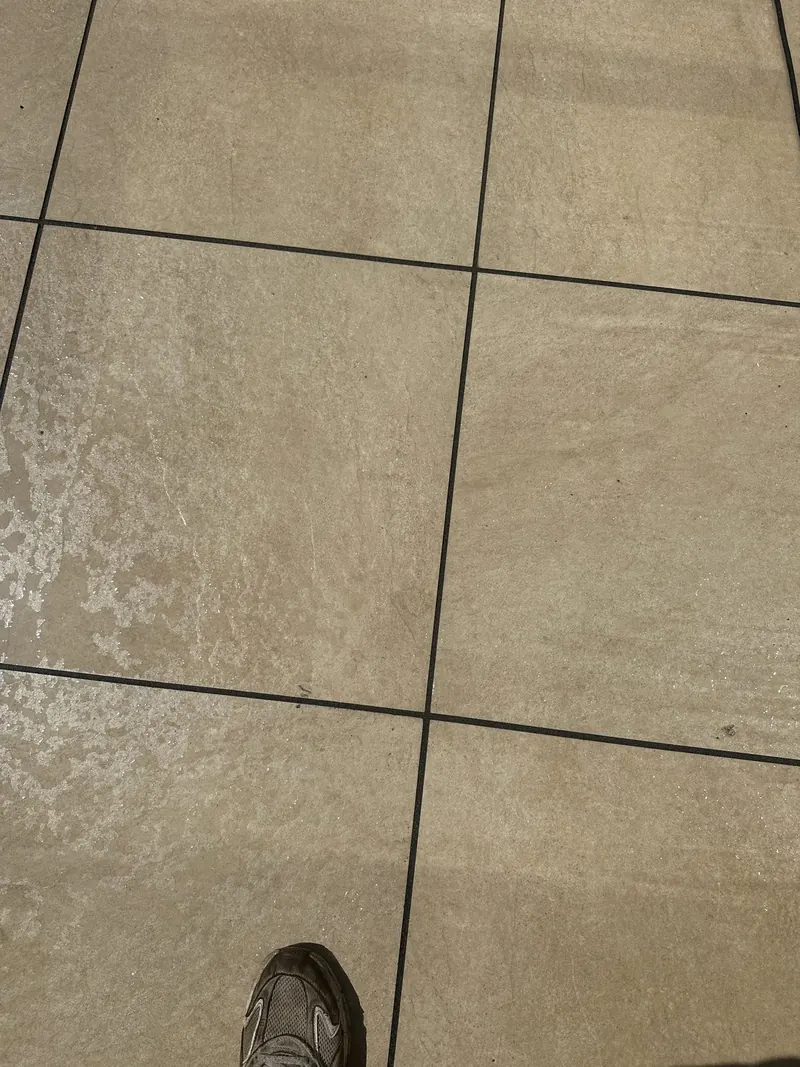
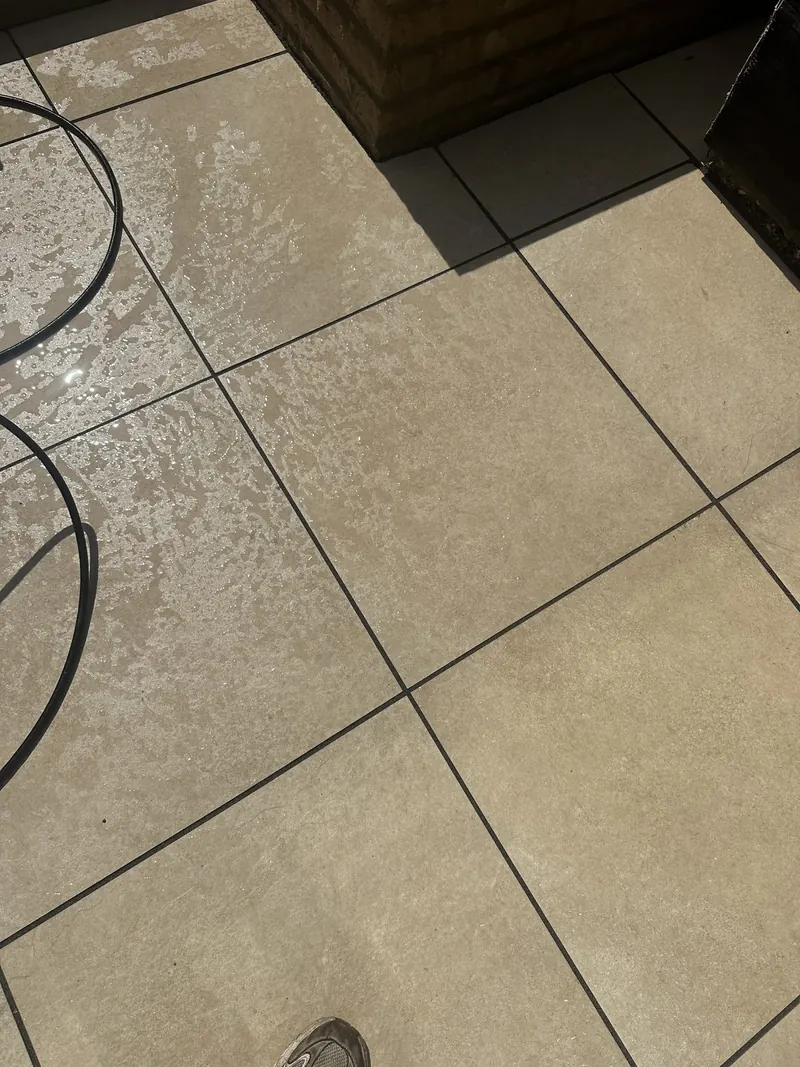
Ask what you want to see when the patio is dry. It may be clearer paving around the table or a clean edge at the steps. A joint that has failed or a worn patch on a slab is a different issue from material lying on the surface. Photograph the worn area as well as a section that still has the original finish. If you have a coated area or a repair, mark that separately so it can be assessed before choosing a method.
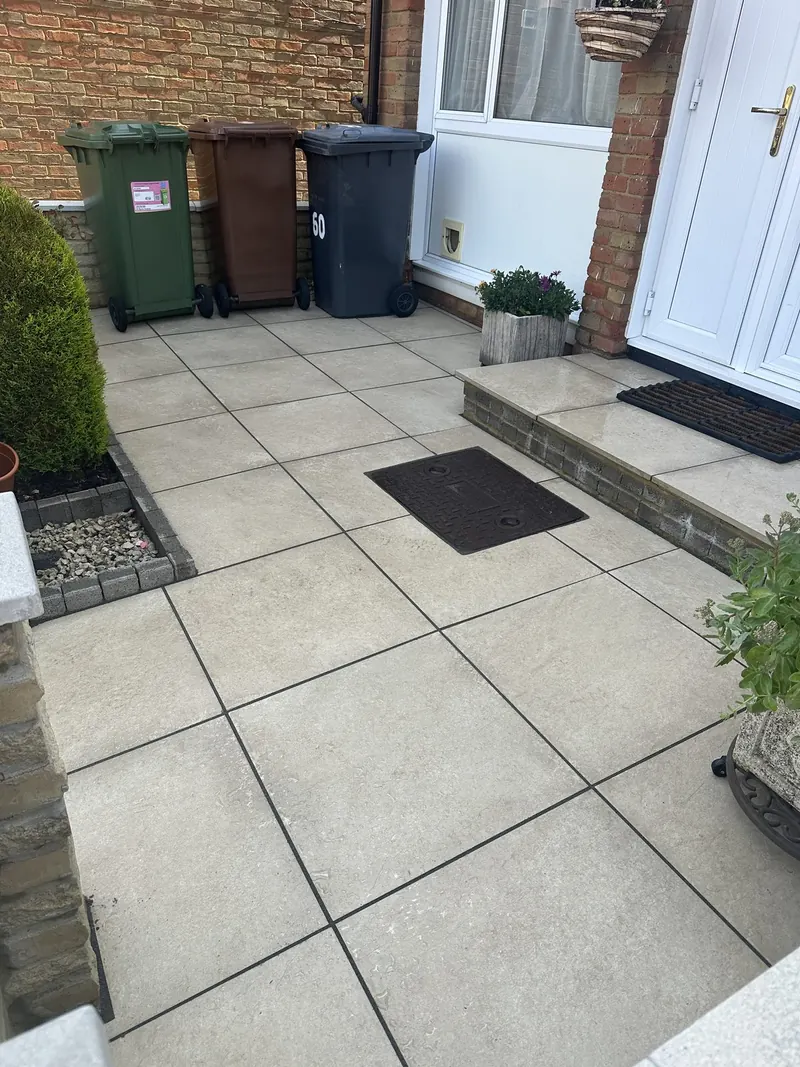
A patio is often assessed from the house side first. Include the threshold and its relationship to the paving. Then photograph the far edge and show whether it meets planting, grass or another paved route. If the work should stop at that edge, mark the line. Tell us which pots, benches and tables can be moved before the visit and what has to stay. That allows the reachable area to be agreed instead of assuming everything underneath can be washed.
Show where weeds are visible and whether the surrounding joint material looks firm. A request for cleaning does not automatically set the scope for joint repairs. The first clean can reveal the condition underneath deposits, but worn stone, an existing stain or damaged pointing may still be visible. If you want a separate assessment of a repair, give the location its own image and note.
Check the edge of each slab before describing the desired finish. A porcelain tile beside a door may have a different joint from older paving beyond it. A dry photograph at that change is useful even if the difference in colour is small. Show a second view looking back towards the house, with the thresholds and the edges of the seating area visible. If furniture stays, identify whether the area directly beneath it should be excluded. Decide what would count as a useful improvement when the patio is dry and put that outcome in the enquiry. This makes it easier to separate the removal of deposits from work to restore a damaged slab or joint.
Algae, joints and the first clean
The RHS guidance on algae and moss on hard surfaces identifies algae and similar growth as a cause of slippery patios. Show the route people use and the parts affected. Include close-ups of pointing and weeds, and distinguish worn paving from material on top of it. Cleaning can address agreed deposits, with any separate joint or surface work assessed on its own.